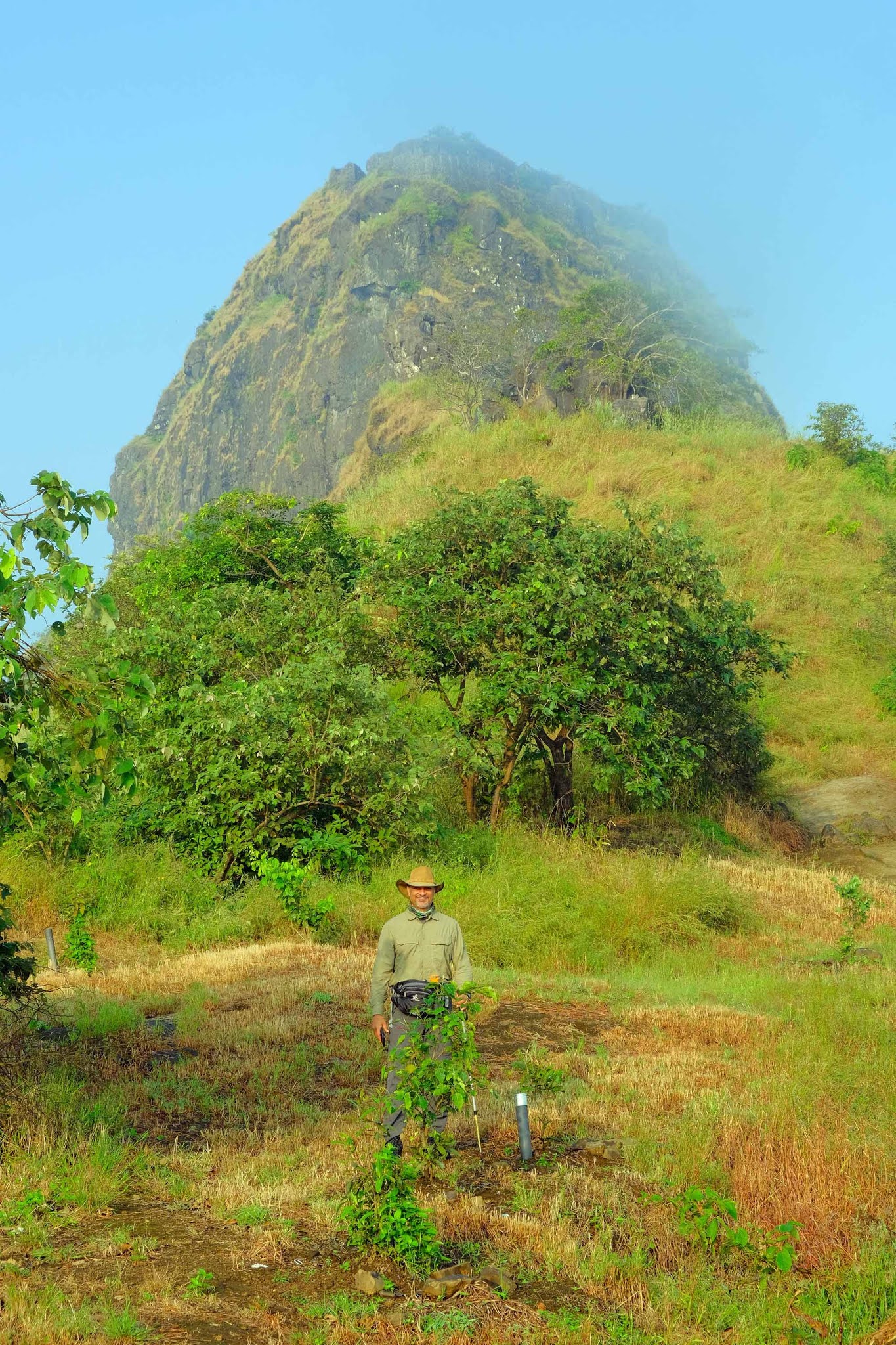
Forts evoke days of yore, proud sentinels of the land, looking in
the eye of the enemy, hand to hand battles, chivalry and sieges.
Forts could be small city states with fort palaces where the ruler
could lock himself and his faithful in. Such fortress palaces
extended many kilometres in diameter and encompassed within its walls
the entire wherewithal to sustain life for months and even years.
 |
Koraigarh Fort complex was possibly built where function takes priority over form. Just a tiny redoubt to
protect a village or an outpost to collect taxes, such tiny functional forts dot the Indian landscape, looking out over the countryside. |
 |
Citadel of Tikone. The attacker could not reach citadel of a complex fort easily, he got to the very top of the fort, if he did at all, after hard fought battles over a series of tactically placed obstacles. He generally saw the citadel after crossing the Darwaza (door or gate ) of the fort, by this time he was quite spent in men and material.
|
 |
Clouds come over the Sahyadris. Except for naval forts guarding harbours and river mouths, forts were almost always sited on a
height so that they could imperiously survey the area around. Clouds obscured vision, so a defender had to compromise between line of sight and altitude. |
 |
Orchha Palace fort, reminiscent of glorious days gone by. Forts were designed essentially for
two purposes, the first being to dominate and defend territory or
access to harbours. They also projected the might of a ruler, as the more ornate fort palace complex the mightier the line of rulers. |
 |
The grandeur of Gwalior Fort and Palace at sunrise. The second reason for making or extending forts and palaces were at
times of famine when the ruler needed to disburse to the population the grain collected
as taxes. Probably the original concept of giving food for doing work. These two reasons often overlapped so
that battles across the country with accompanying famine gave us many
forts. |
 |
The Bastion of the fort at Jhansi. Being essentially defensive, forts
were designed so that minimum soldiers could dominate far more vast
armies or populations. These locations also served as sally ports for enhanced troops that the emperor may send to attack an invader. All features of a bastion were then oriented to
these purposes. The steps, crenellations, embrasures, served to concentrate defending troops at points of decision. Walls were so made that defenders could concentrate on sides where the attacker was maximum, effecting economy of defensive forces.
|
 |
The steep approach Visapur Fort. To space out an attacker, most
approaches were narrow, up steep hills, the steps or path allowing
for at most one or two men at a time. This forced piecemeal deployment of the attacker also enabled a defender to stop
far greater numbers with the relatively few men available to him. |
 |
| The path up to the citadel of Tikone Fort. By now the attacker would have been decimated by the outer walls and the layers of obstacles in his path. The narrow and steep approach also meant that the attacker would have to use his hands for climbing and not for weapons. The degree of difficulty was increased by making the approach slippery with water and having high walls on either side manned by the defender. |
 |
A lone Monkey now sits sentinel on the mighty and extensive walls of Kumbhalgarh Fort. The main gate of a fort was often at
right angles to the path up, this was by devious design. Elephants
or other gate-breaking devices could not charge the gate, having to
turn at right angles meant slowing down and reducing or negating the momentum of a
charge. |
 |
The attacker of Tikone has the Bhuyari Darwaza to contend with. The approach had rapid changes in light and dark for the attacker, this prevented his eyes from adjusting and disorientated him. Allowing the defenders on shelves in the dark to decapitate the attacker without being seen.
|
 |
Turret and walls of Jhansi Fort. The walls of a fort had crenellations,
slits and turrets (bulges) to enable a fewer defenders to face a
larger number of attackers. The slits were so designed that the
defender would have a large field of fire (bow and arrow; later
musket) while exposing himself the least. |
 |
A large weapon emplacement at Visapur. These weapon positions were funnel shaped, being wider towards the defender inside with a narrower slit visible to the attacker from
the outside. The turrets allowed the defender to see the base of the
fort walls on either side so that an enemy could not hide there. |
 |
Water Cistern at Tikone. In the days before gunpowder, it was nearly impossible to capture a fort by force of arms alone. It was generally captured only by guile or treason, or by the attacker laying a siege, sometimes for years. To withstand a siege, the defender had to have adequate stocks of food and ammunition.
|
 |
| Reflection in a water cistern at Rajmachi. The most important supply was water, as most forts were on hilltops, naturally occurring water was inadequate or non-existent. So almost without exception the defender made huge underground cisterns where rainwater was collected in the monsoon and stored for use in the dry months. |
 |
| A large water storage facility at Tikone. Water was (and is) needed for drinking, cooking and washing, sometimes for years. Besides the soldiers, often the local inhabitants of the area would withdraw into the walls to gain protection, so there was a very large need of water. To cater to this copious need, huge water tanks were made above and below ground. |
 |
Tuljadevi Mandir at Tikone. Religion was (and is) very important
to a soldier, after all he was being asked to lay down his life and there is no greater sacrifice. Every fort has a temple which is dedicated to a ruling deity and many have
more than one. In fact many forts are named after a deity.
|
 |
Another symbol of victory. Battle was mystical and religious and
most modern armies too have some form of worship to weapons and Gods
of war. Shastr pooja (religious ceremonies pertaining to weapons) is an integral part of military life even today. All parties to a conflict feel that God is on
their side and the righteous will win, this belief has held true through the ages. |
 |
Weapons positions at Visapur. Stones were precision cut, in most
cases being held together by gravity or lime. Weapons slits were always tactically cut, never to accommodate a particular size of stone. Depending on how long a fort had been in use and the time available, such places were austere or engraved and adorned. |
 |
Stones in the wall of Shreevardhan. The line of the cut was so precise, that it each stone rests perfectly on the other. One wonders at the time taken to cut so finely such heavy stone blocks at height with very restricted access. Most forts were made from stone quarried from where the fort stood. These stones have withstood the centuries and structures made from them are still standing in places.
|
 |
| A tower at Gwalior Palace/Fort. If the fort was meant to project power or had a palace within, embellishments were added to the more ornate carving in stone. Craftsmen would decorate the edifice with local or imported skills and materials. In some places semi-precious stones or fine inlay work is evident where these have withstood the ravages of time and invaders through the centuries. |
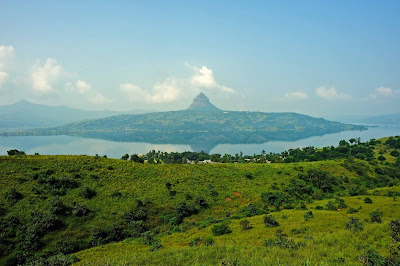 |
Tung Fort as seen from Tikone. Communication means at that time were
line of sight, smoke or reflections by day and fire by night. This
was why many forts were within sight of each other, in many places
one can see two or three other forts from one.
|
 |
Langurs Frolic where soldiers once stood. Fort walls are now decrepit, repaired in places and falling apart in others. The fearsome crenellations of yore are now sadly overgrown with vegetation. Gunpowder and the industrial age gradually rendered fixed defences untenable, with these went forts. For a while some forts were re-purposed, as prisons, outposts or granaries, but now even these uses are no longer required. |
 |
| Once proud walls look out over the country side. Forts were once glorious but with time they have become irrelevant and mostly allowed to go to seed. In some places desultory repairs have been effected, but mostly these proud monuments to our military past are falling apart. Tourists gawk, picnic and tragically litter what remains of this ancient military heritage. The tales of valour , heroism, treachery and daily life these stones would tell if only they could talk. |